Best Noise-Cancelling Headphones for a Snoring Partner
ANC is built for steady engine hum, and snoring is anything but steady. Here is why cancellation alone falls short, and what combination actually gets you to sleep.
ReviewHubNow Editorial Team
ReviewHubNow Editorial Team
This is not medical advice. This is editorial research, not a clinical recommendation. Talk to your doctor or pharmacist before starting, stopping, or changing any supplement or medical product, especially if you take medication or manage a health condition.
Sleeping next to someone who snores turns into a nightly arithmetic problem about accumulated sleep debt, and the obvious solution looks like buying whichever headphones claim the strongest noise cancellation. That answer is incomplete, and understanding why saves both money and several disappointing nights.
Active noise cancellation is genuinely impressive technology aimed at a specific kind of sound. Snoring is a different kind of sound. The mismatch between the two explains almost everything about why people are underwhelmed when they try this.
One important note before the hardware. Loud snoring with gasping, choking or breathing pauses can indicate obstructive sleep apnea, which is a medical condition with real cardiovascular consequences and effective treatment. Muffling the sound does nothing for the person experiencing it. If that pattern sounds familiar, the right first step is a doctor rather than a purchase.
Why doesn't noise cancellation work well on snoring?
ANC works by sampling incoming sound and generating an inverted wave to cancel it. That approach excels against continuous, predictable, low-frequency noise, which is exactly what aircraft cabin hum, HVAC systems and road drone are. Those are the conditions the technology was built for, and it handles them impressively.
Snoring only partly fits that description. The underlying rumble sits low in the frequency range and ANC handles it reasonably well, flattening it toward a background murmur. The problem is everything layered on top: irregular mid-frequency bursts, snorts and sudden gasps that arrive without a predictable pattern.
Cancellation circuitry works best when it can anticipate a repeating waveform. Snoring is periodic in the technical sense and erratic in the practical one, so the steady component gets reduced while the sharp bursts pass through comparatively intact. Those bursts are precisely what wakes people up, which is why buyers who expect silence report being let down.
What actually works against snoring at night?
Cancellation combined with masking, rather than cancellation alone. ANC lowers the steady rumble, and a masking sound raises the floor so the remaining spikes stand out far less. The mechanism is perceptual contrast: a sudden noise is disruptive in proportion to how much quieter its surroundings are, so a consistent sound layer makes the same snort less startling.
Brown noise tends to suit this better than white noise because it carries more low-frequency energy and sits closer to the character of the sound being masked, though preference varies and it costs nothing to try both. Many ANC headphones now include sleep sound libraries in their companion apps, and that feature turns out to matter more for this use case than any decibel-reduction figure on the box.
Which headphones suit sleeping in?
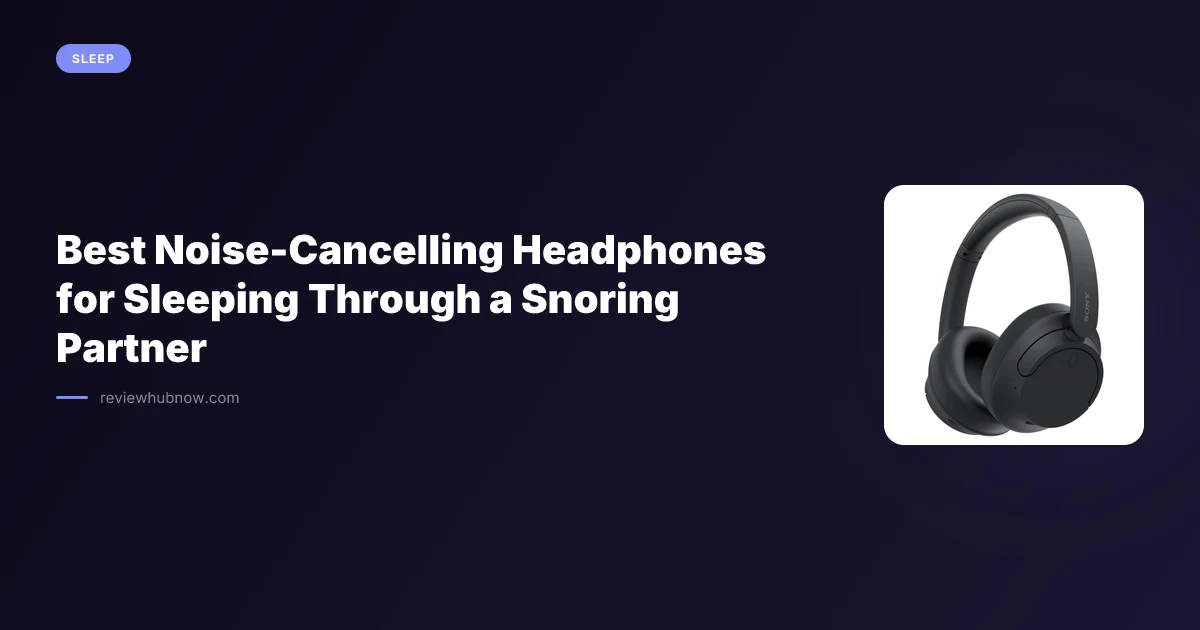
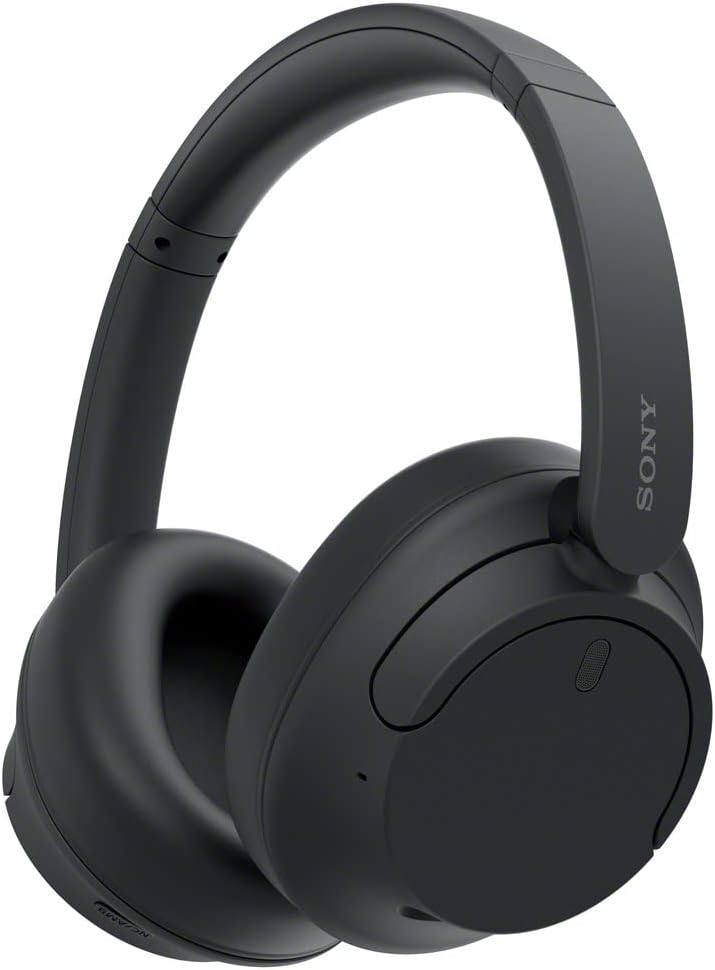
Weight and profile matter more than cancellation strength once you are lying down, which inverts the usual buying priorities. Lighter over-ear models such as the Sony WH-CH720N are more tolerable across a full night than heavier premium sets, and less expensive options like the Soundcore Q20i cover the same ground for less, since the marginal ANC gain from spending more does not translate into better sleep when comfort is the limiting factor.
Our Sony and Beats comparison covers how these perform for daytime listening, which is a genuinely different question. For sleep, ignore soundstage and codec support and look at clamping force, cup depth and weight.
Bass-forward headphones are the wrong tool entirely. A model like the Skullcandy Crusher Evo, with haptic drivers that physically vibrate against the head, is built to add sensation at exactly the moment you want none of it.
Can you wear over-ear headphones while sleeping on your side?
Not comfortably, and this is the limitation no product page addresses. Side sleeping presses the earcup between your ear and the pillow, which concentrates pressure on cartilage and typically produces a dull ache within half an hour. Waking up from ear pain instead of snoring is not an improvement.
Padding does not solve it, because the obstacle is geometry rather than cushioning. Any rigid cup thick enough to house drivers and cancellation electronics is thick enough to press when a pillow pushes back.
Side sleepers are better served by a sleep headband with flat internal speakers, a genuinely different product category built around the constraint. The trade-off is that headbands offer little or no active cancellation, so they lean almost entirely on masking. Foam earplugs paired with a fan or sound machine remain a legitimate and much cheaper route, and our piece on blocking snoring without earplugs covers where each approach wins.
What is the realistic expectation?
Back sleepers who want cancellation plus a masking layer can get real relief from a light over-ear set, and the Sony WH-CH720N is a sensible starting point with the Soundcore Q20i as the budget alternative. Expect the rumble to recede and the occasional snort to still register.
Side sleepers should skip over-ear headphones and go to a headband or earplugs rather than spending more in search of a comfort that the physical design cannot deliver.
The broader point is that noise-cancelling marketing assumes a noise problem that behaves predictably, and snoring does not behave predictably. Buy for the sound you actually have, expect meaningful improvement rather than silence, and remember that persistent loud snoring with gasping is worth a medical conversation regardless of what you wear to bed.
Editor's Pick
Affiliate link. We may earn a commission if you buy through it, at no extra cost to you.
More from Our Editors
Meta Quest 3S 512GB vs 256GB: How Much Storage Do You Actually Need?
By ReviewHubNow Editorial Team
Do You Need a Soundbar With a Built-In Subwoofer for a Small Room?
By ReviewHubNow Editorial Team
Ottocast Mini Cube 3.0 vs CarlinKit: Which Adapter Should You Buy?
By ReviewHubNow Editorial Team