Choosing the Right Insulin Pen Needle Length and Gauge
Gauge and length solve different problems, and the length advice most people were given is out of date. Here is what current guidance says, and why your prescriber decides.
ReviewHubNow Editorial Team
ReviewHubNow Editorial Team
This is not medical advice. This is editorial research, not a clinical recommendation. Talk to your doctor or pharmacist before starting, stopping, or changing any supplement or medical product, especially if you take medication or manage a health condition.
Packaging in this category tells you very little. Phrases like ultra-fine sit on nearly every box, while two numbers actually determine whether a needle suits you: gauge and length. Most first-time buyers have the relationship between them backwards.
Before anything else: needle length and gauge are clinical decisions belonging to your prescriber or diabetes educator, not to a buying guide. This article explains what the specifications mean so the conversation is easier to have. It does not replace it, and nothing here should prompt you to change what you were prescribed.
What is the difference between gauge and length?
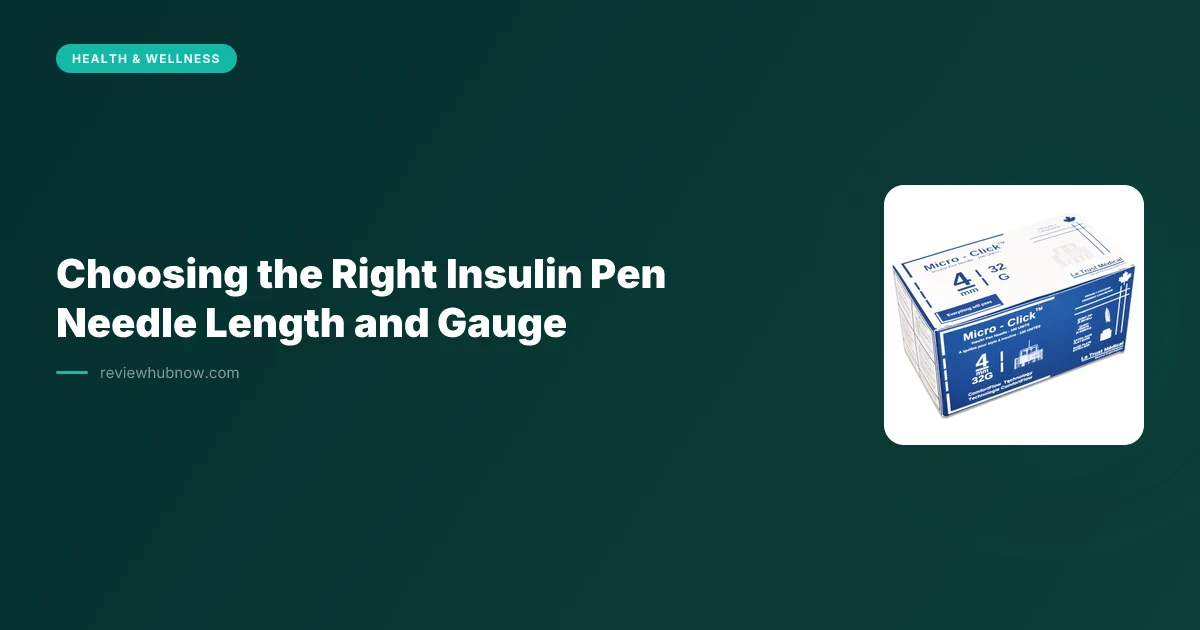
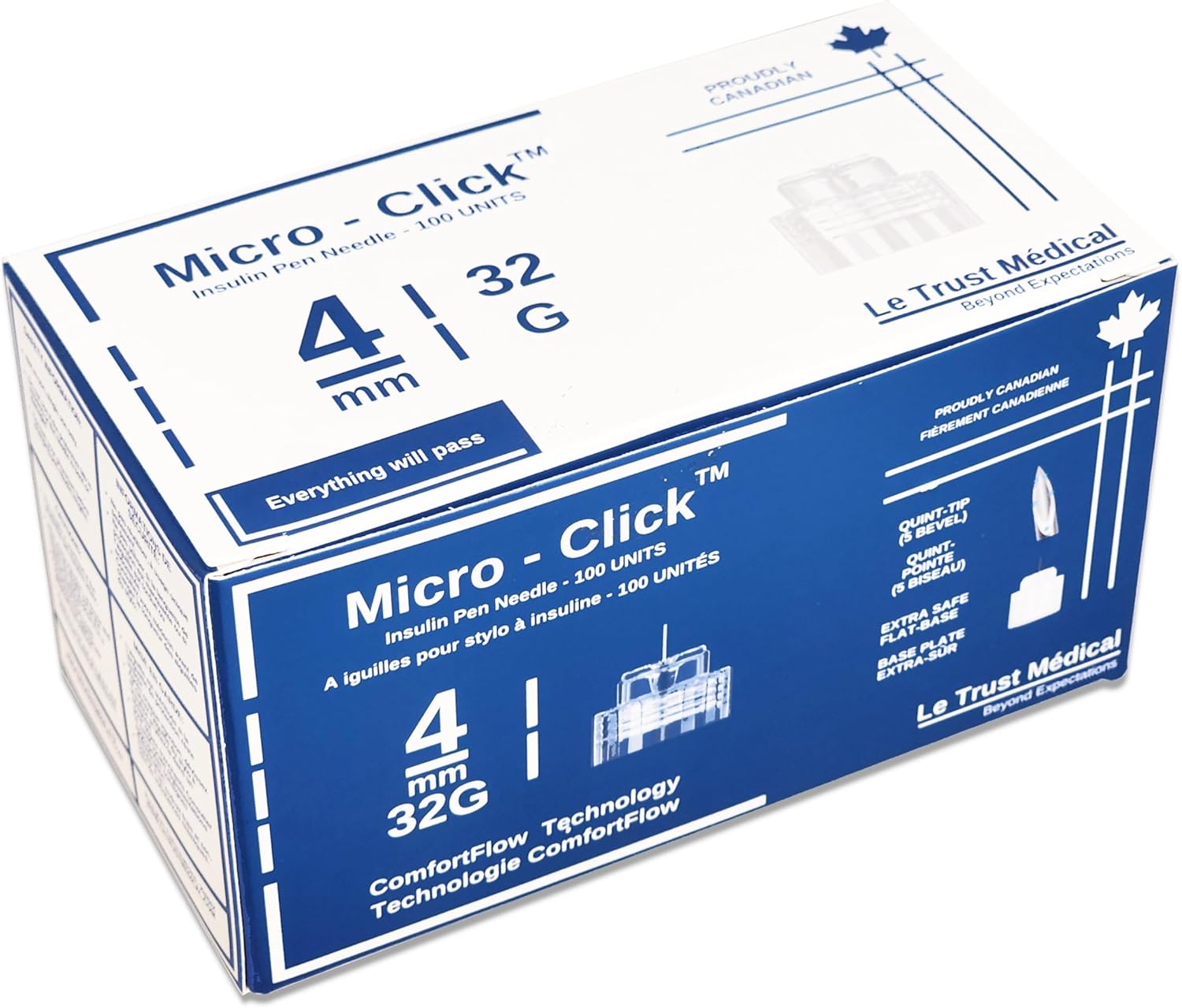
Gauge describes the needle's diameter, and the scale runs backwards: a higher number means a thinner needle, so 32G is thinner than 30G and 33G thinner still. Length is the physical needle length, commonly 4mm, 5mm, 6mm or 8mm.
The two specifications address separate problems. Gauge mostly affects comfort, along with how easily thicker or concentrated insulin formulations pass through the bore. Length determines whether insulin is delivered into subcutaneous fat rather than muscle, and that is where outdated advice still circulates widely.
Why shorter needles became the standard
Length recommendations once scaled with body mass, on the assumption that a larger person needed a longer needle to pass through more tissue before reaching subcutaneous fat. Clinical guidance has moved away from that.
Current international injection technique recommendations support 4mm needles reaching subcutaneous tissue reliably in adults across body sizes, when inserted at 90 degrees with correct technique. Shorter needles perform comparably to longer ones for most adults, including people who are overweight or obese.
The reason this matters is not comfort alone. Longer needles do not improve dosing accuracy, and they raise the chance of injecting into muscle, where insulin absorbs faster and less predictably, making blood glucose harder to control. That is a clinical outcome, which is exactly why the decision belongs with your care team rather than with a product page. If nobody has reviewed your needle length in years, it is worth raising at your next appointment.
Which packaging claims mean anything?
- Painless or virtually pain-free claims. Pain perception varies enormously between individuals, injection sites and technique. A thinner gauge helps, and no marketing claim survives a scarred injection site or a rushed injection.
- Triple-bevelled or laser-cut tips. This one is genuine engineering rather than filler. A properly bevelled tip reduces tissue drag and discomfort, and it is among the few premium claims that holds up in use.
- Universal fit. Most modern pen needles use a standard screw thread compatible with major insulin pen brands, and not with every device on the market. Confirm compatibility with your specific pen, ideally with your pharmacist, before buying in bulk.
Why single use matters
Needle sharpness degrades immediately with reuse, and this is mechanics rather than a scare tactic. A tip that punctures cleanly the first time develops microscopic burrs after a single reuse, which increases pain and the risk of tissue trauma at the injection site.
Repeated trauma at the same sites contributes to lipohypertrophy, the firm fatty lumps that develop under the skin and absorb insulin erratically, which is a genuine glucose control problem rather than a cosmetic one. Anyone rotating sites properly and still seeing bruising or soreness accumulate should look at needle reuse before blaming the brand.
Used needles are biohazardous sharps and belong in an approved sharps container rather than household waste. Canadian pharmacies commonly supply containers and accept full ones for disposal.
Does buying cheaper needles cost you anything?
Not automatically, and caution is warranted with unfamiliar brands when the difference per needle is a few cents. Genuinely low-quality needles fail undramatically, through a slightly duller tip and less consistent bevel, which registers as marginally more discomfort across hundreds of injections. That accumulates for anyone injecting several times daily.
Because these are high-frequency, low-cost purchases, small per-unit savings matter far less than getting length and gauge right. Buying the wrong length on sale is false economy, since those needles either go unused or get used incorrectly.
What should you do before buying?
Confirm the length and gauge with your prescriber or diabetes educator, particularly if your current needles were chosen years ago under older guidance. Check the thread fitting against your actual pen before ordering in bulk, and prioritise single-use discipline over hunting the lowest per-unit price.
Anyone tracking glucose alongside other wearable health metrics may find our smartwatch health claims fact-check useful for separating validated features from unvalidated ones.
The needle is not where blood sugar management is won or lost, since diet, activity, medication and timing carry that weight. Getting this small purchase right removes one avoidable source of bruising, inconsistent absorption and unnecessary discomfort, which is worth the five-minute conversation with your care team.
Editor's Pick
Affiliate link. We may earn a commission if you buy through it, at no extra cost to you.
More from Our Editors
Meta Quest 3S 512GB vs 256GB: How Much Storage Do You Actually Need?
By ReviewHubNow Editorial Team
Do You Need a Soundbar With a Built-In Subwoofer for a Small Room?
By ReviewHubNow Editorial Team
Ottocast Mini Cube 3.0 vs CarlinKit: Which Adapter Should You Buy?
By ReviewHubNow Editorial Team