Does Heat Protectant Spray Actually Prevent Heat Damage or Not?
Everyone assumes heat protectant spray makes hair immune to flat irons and blow dryers. Here's what the actual heat-damage research says about that.
ReviewHubNow Editorial Team
ReviewHubNow Editorial Team
This is not dermatological advice. This is editorial research rather than a professional consultation. Patch test new actives, and speak to a dermatologist if you have a skin condition, are pregnant, or react to a product.
The pitch in every beauty aisle runs the same way: apply this before the flat iron, the dryer or the curling wand, and your hair is protected. The implication is a shield. Skip it and you are frying your hair, use it and you are safe.
That is not how the chemistry works, and the gap between the marketing and the mechanism should change both how you use these products and what you expect from them.
Does heat protectant make hair heat-resistant?
No spray does. Hair is keratin protein, and keratin begins breaking down structurally at around 300°F. Most flat irons and curling wands operate between 350°F and 450°F, comfortably past the point where protein bonds denature whether or not you applied anything first.
What a good protectant does is create a barrier that slows heat transfer and reduces moisture loss from the hair shaft, functioning as a buffer rather than a force field. The silicones and polymers in these formulas, including dimethicone and amino-based polymers, coat the cuticle and slow the rate at which water inside the shaft turns to steam.
That mechanism matters more than most users realise, because a great deal of heat damage is not the heat directly. It is internal water flash-boiling and forcing the cuticle open from within. Slowing that genuinely reduces breakage without eliminating it.
Does using more product give more protection?
The opposite, and this is where people undo their own efforts. Excess protectant does not scale protection, it leaves buildup that can smoke or singe against a hot plate. Saturating hair in the belief that thoroughness helps is a common route to ends that feel crisp and smell faintly burnt.
These formulas are designed around a thin even coat, usually a light mist through damp or dry hair worked through with fingers or a wide-tooth comb. Visible product sitting on the surface means too much has gone on, which makes the outcome worse rather than better.
Are all heat protectants the same?
No, and the differences are functional rather than cosmetic. Silicone-heavy sprays deliver the best immediate slip and thermal buffering, and they accumulate over time and can leave colour-treated hair looking dull without an occasional clarifying wash. Lighter polymer-based sprays buffer less aggressively while avoiding that weight and colour dulling.
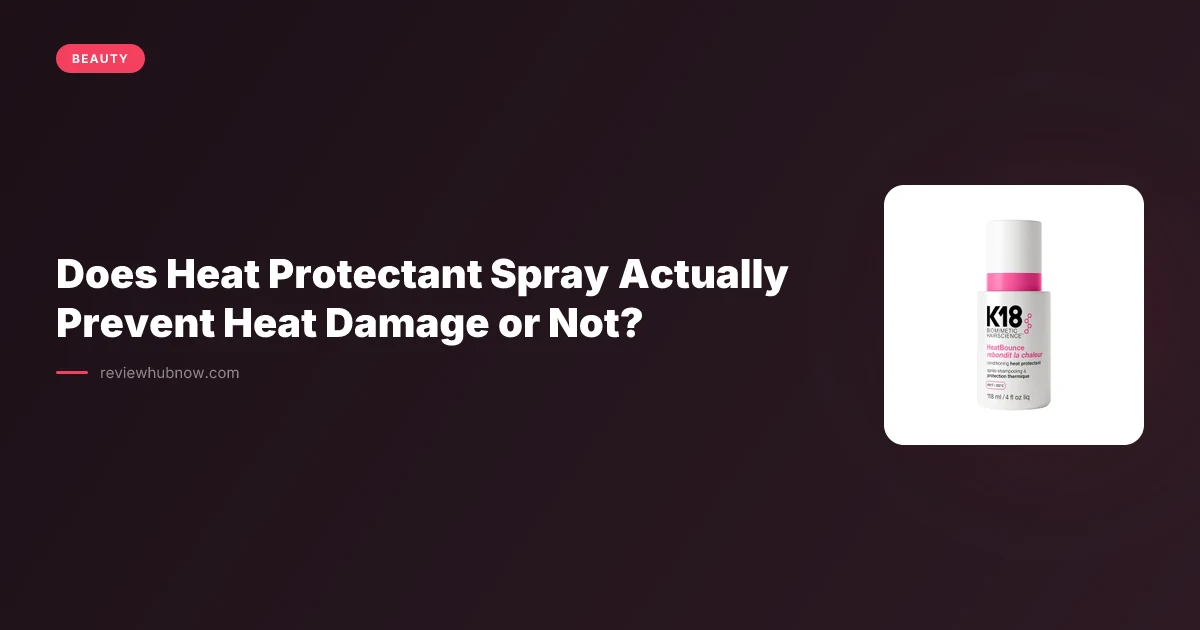
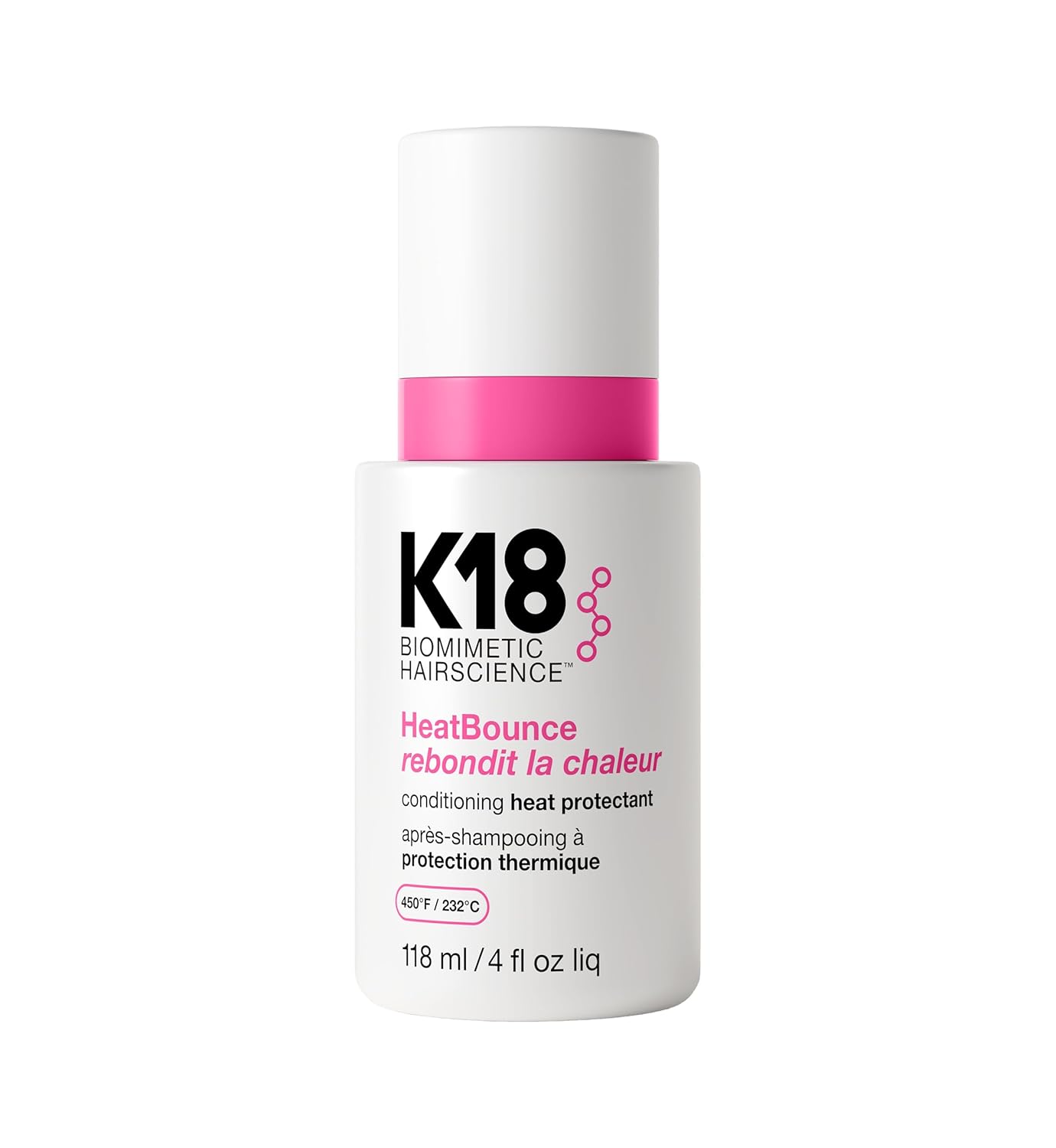
Bond-support formulas occupy a separate category. Products including peptides aimed at internal bonds work through a different mechanism than a surface coating alone, and the K18 HeatBounce Conditioning Heat Protectant Spray is a reasonable example: a thermal buffer paired with peptide technology targeting the bonds heat actually breaks. That distinction is why the category has split between basic barrier products and bond-support ones.
Can you skip protectant on low heat?
Not sensibly, even though lower temperatures genuinely are less damaging. Repeated exposure around 300°F still accumulates, because heat damage is cumulative rather than a threshold you either cross or avoid. Fine and colour-treated hair begins showing cuticle lifting and moisture loss at temperatures many people consider gentle.
Daily styling even at modest settings stacks small protein and moisture losses every day. Protectant does not stop that accumulation, and it slows the rate meaningfully, which across a year separates hair that retains elasticity from hair that snaps under a brush.
What does the research support?
Work on thermal styling and hair fibre integrity converges on a modest, real conclusion: silicone or polymer coatings measurably reduce moisture loss and tensile strength decline compared with unprotected hair at the same temperature. The effect is genuine without being absolute, and reduction rather than elimination is the accurate framing.
That same pattern runs through most beauty claims, as our analysis of retinal booster marketing found. A product that works modestly gets sold as one that works completely, and disappointment lives in that gap.
The overlooked variable is the tool. Protectant paired with a cheap iron that heats unevenly and spikes past its dial setting still causes damage, because no spray compensates for inconsistent temperature. Evenly heating ceramic or tourmaline plates contribute more to hair condition than switching protectant brands ever will.
So should you use it?
Every time you apply heat, yes. What deserves adjustment is the expectation. It is a buffer rather than a shield, slowing moisture loss and cuticle damage in a way that compounds across months into the difference between hair that holds a style and hair that has turned brittle.
Apply a thin even layer, match the formula to your hair type and colour status, and keep the styling temperature as low as your texture allows. Those three habits together deliver real protection. No spray undoes the physics of 400°F metal against protein fibre, whatever the bottle claims.
Editor's Pick
Affiliate link. We may earn a commission if you buy through it, at no extra cost to you.
More from Our Editors
Meta Quest 3S 512GB vs 256GB: How Much Storage Do You Actually Need?
By ReviewHubNow Editorial Team
Do You Need a Soundbar With a Built-In Subwoofer for a Small Room?
By ReviewHubNow Editorial Team
Ottocast Mini Cube 3.0 vs CarlinKit: Which Adapter Should You Buy?
By ReviewHubNow Editorial Team