What Our Research Found
Let's put the safety context before the product, because here the order matters. Padded crib bumpers are associated with suffocation risk; health authorities in Canada and the U.S. recommend against them, and bare cribs are the standard: firm mattress, fitted sheet, nothing else. Every crib accessory must argue against that baseline.
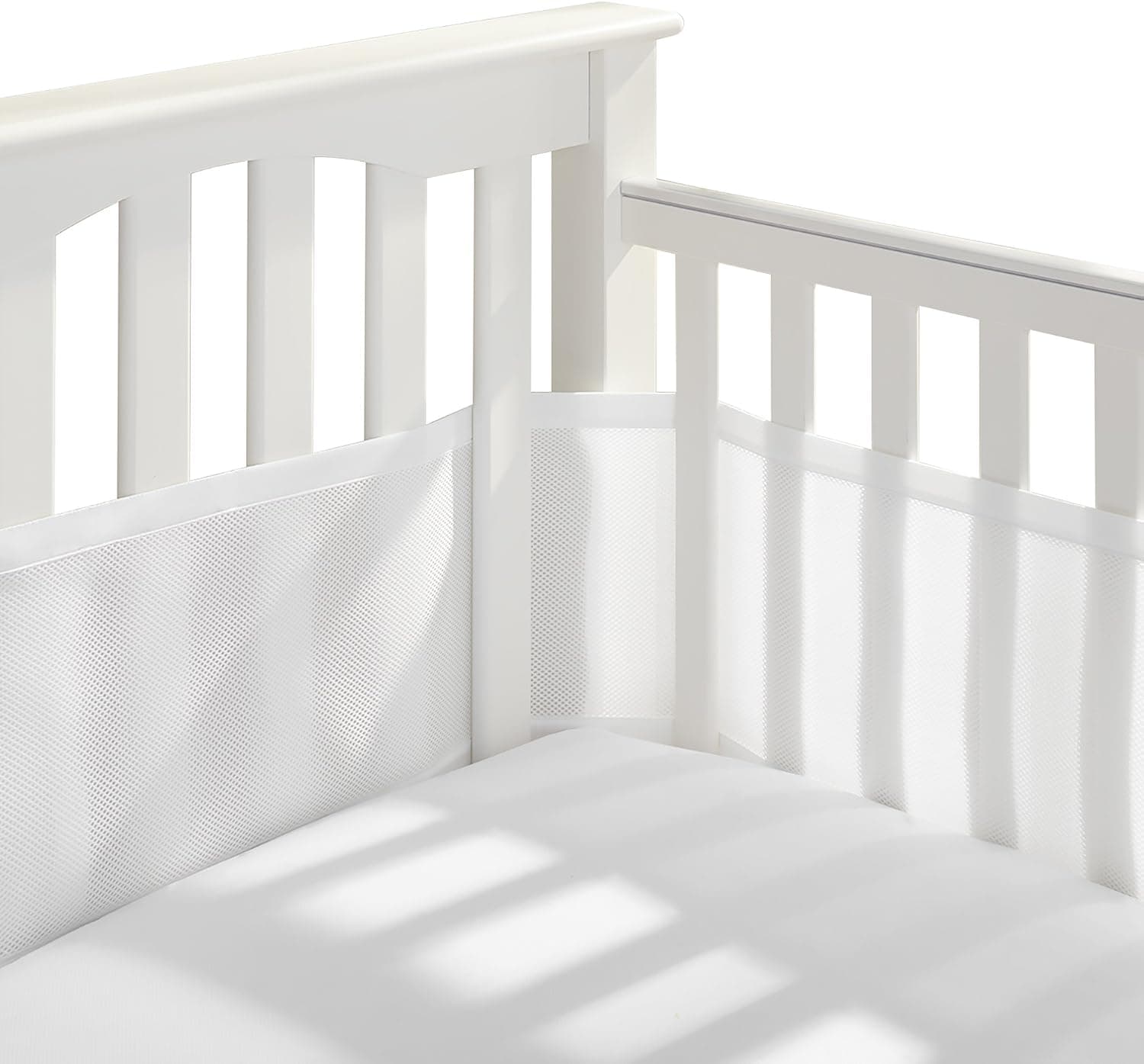
BreathableBaby's argument is the mesh itself: a thin, taut, air-permeable panel a baby can breathe through even pressed face-first, attached snug to the rails with minimal padding to climb or gap to catch. It exists for one real problem, the limb-through-slats wake-up, which parents of thrashing sleepers know at 3 a.m.
The design earns its differentiation. Airflow through the mesh is genuine, the fit ties tight enough to resist pulling, and the low profile offers no climbing step for older babies, a real bumper hazard. The 4.5-star aggregate across many years of parents centers on exactly the intended outcome: stuck-limb wake-ups ending. Installation takes patience the first time, and the liner must be re-tensioned after washes, per recurring owner notes.
Bottom line
Where that leaves this product: it's the best-executed version of a category living in the gap between ideal guidance and real nurseries. If limbs-through-slats is disrupting sleep in your house, this is the version safety-minded parents choose. If nothing is wrong, the bare crib needs no upgrade.
Talk to your pediatrician, especially for babies under a year. That sentence isn't legal filler; it's the actual correct step before any crib addition.
Why were crib bumpers banned, and does mesh escape the logic?
Padded bumpers earned their warnings through suffocation and entrapment: soft surfaces near a face that can't reliably turn away, plus ties and bulk creating their own risks. Canadian and U.S. guidance converged on bare cribs because absence is the only accessory with zero failure modes. Any review of a crib product that skips this context is selling, not reviewing.
The Good & The Bad
thumb_up What We Loved
- check
Solves the stuck-limb wake-up
The specific misery it targets, an arm wedged between slats at 3 a.m., reliably ends, per years of parent feedback.
- check
Breathability that isn't marketing
The mesh passes air with a face pressed to it, the decisive difference from the padded bumpers authorities warn against.
- check
No boost step for climbers
Flat, thin, and taut means nothing to stand on, removing the toddler-escape hazard padded bumpers add.
- check
A veteran product with a long record
This design has wrapped cribs for many years at 4.5 stars, and its safety story has aged well next to the category it replaced.
thumb_down Honest Drawbacks
- close
The bare crib is still the standard
No liner improves on nothing-in-the-crib for pure safety. This product's case begins only when a real problem does.
- close
Installation quality is on you
Loose mesh or long ties recreate hazards the design avoids. The safety margin lives in a careful install and weekly checks.
- close
Wash-day maintenance
Re-tensioning after laundering is mandatory and mildly annoying, per consistent owner notes.
- close
Not for the newest sleepers
The younger the baby, the stronger the bare-crib logic. Most careful users add it months in, with pediatrician input, not at birth.
- close
Sizing is crib-specific
Full-size cribs are covered, but non-standard, mini, or older cribs need careful measuring, and a poor fit undoes the taut-install safety logic.
Technical Breakdown
Air-permeable mesh
Breathe-through fabric
Taut, low-profile fit
Full-size cribs, 4-sided
Problem-solution match
Limbs through slats
Category status
Between guidance and practice
How It Works
Installation care is safety care here. Take the ten minutes.
Install taut, tie low
Wrap the rails and tension the panel drum-tight, with ties knotted short, trimmed, and outside the crib. Slack fabric is the failure mode to engineer out.
Check the fit weekly
Babies pull. A ten-second tug test on the mesh and ties keeps the install honest, and re-tension after every wash.
Keep the rest of the crib bare
The liner replaces nothing about safe-sleep rules: firm mattress, fitted sheet, no blankets, pillows, or toys.
Retire it when climbing starts
Once a toddler uses anything as a boost step, rail accessories come off. The liner's low profile delays but doesn't cancel that day.
How It Compares
| Option | BreathableBaby mesh liner | Bare crib (recommended default) |
|---|---|---|
| Suffocation pathway | Air-permeable mesh | cancelNone to manage |
| Limbs through slats | Prevented | Possible, harmless but sleep-breaking |
| Install/maintenance risk | On the parent | cancelNone |
| Guidance alignment | Harm-reduced accessory | The recommendation itself |
| When it makes sense | Real stuck-limb problem, doctor consulted | Always, absent a problem |
Frequently Asked Questions
Are mesh crib liners safe, or are all crib liners bad?
The blanket warnings target padded bumpers, whose suffocation and entrapment record is why bare cribs became the standard. Breathable mesh liners were engineered against those specific mechanisms, air-permeable, taut, thin, and represent the harm-reduced end of the category. The conservative answer remains that no liner beats an empty crib; discuss your case with your pediatrician.
What age can a baby have a mesh crib liner?
The younger the baby, the stronger the bare-crib logic, and careful households typically consider mesh only after the newborn months, once rolling and limb-thrusting create the actual stuck-arm problem. There's no universal green-light age; your pediatrician plus your baby's mobility pattern is the real answer.
Does the BreathableBaby liner actually stop legs getting stuck in crib slats?
That's its one job and the job owner feedback confirms across years: the taut mesh simply removes the gap a limb needs. If stuck limbs are waking your baby nightly, this is the mechanism that ends it, installed tight and checked weekly.
Can a toddler use the mesh liner to climb out of the crib?
The liner's flat, taut profile deliberately offers no foothold, which is one of its genuine advantages over padded bumpers. Once a determined toddler starts using anything as climbing gear, though, rail accessories should come off and the crib-to-bed conversation starts.
How do you wash a mesh crib liner?
Machine wash gentle, air dry, and then, the step owners flag as easy to forget, reinstall with full tension and short-tied, trimmed knots outside the crib. A liner is only as safe as its current install, and wash day is when installs quietly go slack.
library_booksReferences & Further Reading
Our reviews are informed by peer-reviewed research and authoritative health organizations. These sources provided context for this review:
- linkHealth Canada — Safe sleep for babies
- linkCanadian Paediatric Society — Safe sleep recommendations
Editorial note: Links to external sources are provided for informational purposes. ReviewHubNow is not affiliated with these organizations and does not receive compensation for linking to them.
BreathableBaby built the version of this product that deserves to exist: mesh that answers the bumper era's hazards poin...
Based on our research and analysis, BreathableBaby Breathable Mesh Crib Liner (Full-Size) scored 7.2/10. See the full verdict above for who it suits — and who should pass.
View Price on Amazon Canadaarrow_forwardVerify official availabilityWhat Owners Report
Recurring themes we found across public owner reviews.
Parents of flailing sleepers describe the exact promised outcome: wedged-arm wake-ups gone from the nightly rotation, with many noting they chose mesh specifically after reading bumper warnings.
Install fiddliness leads: first-time setup patience, ties that demand trimming, and re-tensioning after washes.
The comment thread every listing in this category earns: parents debating liners versus bare cribs, which is precisely the debate to have, ideally with a pediatrician in it.
Amazon Canada's standard 30-day return policy