What Our Research Found
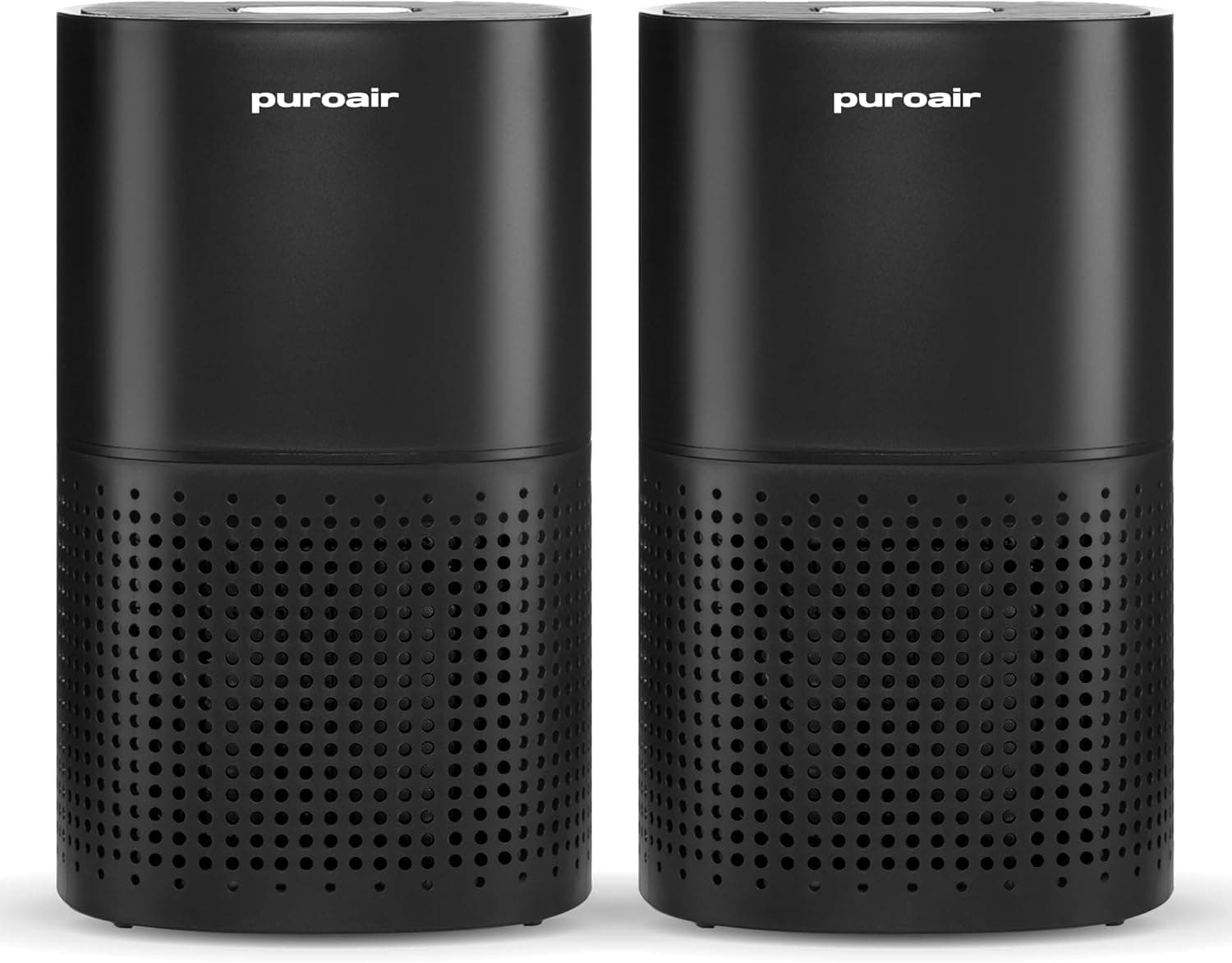
Air purifiers are sold on fear and bought on faith, so we anchor on the two things that actually differentiate them: how much air they move through what grade of filter, and what ownership costs once the box is open. The PuroAir 240 makes big claims for big rooms, roughly $400 worth of them.
Everything hinges on the coverage class. A purifier rated near 1,000 square feet does whole-living-area work that would otherwise take two or three bedroom-sized units, which reframes the sticker price considerably.
The 240 runs a multi-stage setup: a prefilter for hair and large dust, a HEPA-grade main filter for fine particles, and a carbon layer for odours. HEPA-class filtration captures the particle sizes that matter for allergies and smoke. What separates machines is the airflow through that filter, which sets how many times per hour a room's air gets cycled. In its rated range, the 240's approach lines up with how effective large-room purifiers are built, and its 4.5-star aggregated rating suggests the delivered experience matches the spec sheet for most buyers.
Bottom line
For open-plan spaces and allergy households it consolidates several small purifiers into one machine. The due diligence before buying is comparing its price and yearly replacement-filter cost against equal-coverage rivals, because filters rather than the purchase decide the five-year number.
The best fit is a household with pets, allergies or smoke seasons that wants one central unit doing the heavy lifting. It's overkill in a single bedroom, where a small HEPA unit does the job and you pocket the difference.
What actually decides whether a large-room purifier works?
We assessed the PuroAir 240 by the criteria that govern purifier performance: filter grade, airflow across its rated space, the number of filtration stages, and what maintaining that filter costs over time. HEPA-class filtration is the standard recommended in public indoor-air guidance for reducing fine particulate exposure. Large-room effectiveness comes down to moving enough air through that filter every hour, which is why coverage ratings and continuous operation are inseparable.
The Good & The Bad
thumb_up What We Loved
- check
One unit for a whole living area
Its coverage class replaces multiple small purifiers, which collapses power draw, noise and filter logistics into a single machine.
- check
HEPA-grade filtration where it counts
Fine-particle capture is what moves the needle for allergy, dander and smoke households, and the core spec here is the right one.
- check
Odor handling via carbon layer
Cooking, pet and smoke smells route through the carbon stage, which is a stage cheap purifiers routinely token-size.
- check
Strong aggregated owner satisfaction
A 4.5-star pattern across many buyers is meaningful evidence the machine delivers its promised experience in real homes rather than just on a spec sheet.
- check
Sensible defaults for continuous use
Auto mode is designed to be left alone, which suits the way purifiers actually have to run to hit their rated coverage.
thumb_down Honest Drawbacks
- close
Premium price for the coverage
Around $400 buys the 240, and the large-room category includes credible rivals below that. The value case needs a per-square-foot comparison rather than brand trust.
- close
Filters are the real subscription
Every purifier's effectiveness rides on replacement filters, and skipping them turns any premium unit into an expensive fan. Price the cadence before you buy, not after.
- close
Big coverage means physical presence
Large-room airflow needs a sizable unit. It will be visible in the room and audible at higher speeds, exactly like every machine in its class.
- close
No purifier fixes moisture or source problems
It filters particles out of air. It cannot fix mould sources, damp walls or bad ventilation, and expectations should stay inside its physics.
- close
Overkill in a single bedroom
Buy this for one closed bedroom and you're paying for airflow the room can't use, plus larger filters to replace. A small HEPA unit does that job for a fraction of the money.
- close
Coverage figures assume you leave it running
Rated coverage depends on continuous operation. Owners who switch it on for an hour a day get a fraction of the rated benefit and often blame the machine.
Technical Breakdown
Filtration
Prefilter + HEPA-grade + carbon
Coverage class
~1,000 sq ft rated
Owner rating
~4.5/5 aggregated (at review time)
Filter replacements
Recurring cost, brand-specific
Price position
~$400 tier
How It Works
Purifiers are placement-and-habit machines. Setup is trivial; usage patterns decide results.
Put it where air actually mixes
Place it in the room you occupy most, away from walls and corners, with clearance around the intake and outlet. Central placement beats hidden placement every time.
Remove the filter packaging
Filters ship wrapped inside the unit. Running with the wrap still on is the classic first-day mistake behind a lot of 'it doesn't work' reviews.
Run it continuously on auto
Clean air is a flow equilibrium, not a one-time event. Continuous low or auto operation outperforms occasional bursts on high.
Replace filters on schedule
A saturated filter quietly stops cleaning. Budget the replacement cadence from day one, because that's the true cost of ownership.
How It Compares
| Feature | PuroAir 240 | Budget large-room purifier |
|---|---|---|
| Filtration | Prefilter + HEPA-grade + carbon | Similar staging, thinner filters common |
| Coverage class | ~1,000 sq ft | Varies; often smaller real coverage |
| Price | ~$400 premium tier | Lower entry price |
| Long-term cost | Brand filter cadence | Often cheaper filters |
| Best for | Allergy/pet/smoke households, big rooms | Budget-first large-room buyers |
Frequently Asked Questions
Is the PuroAir 240 worth $400 for a large living room?
It earns the price when you need genuine large-room coverage for allergies, pets or smoke, and one unit replaces the two or three smaller purifiers you'd otherwise run. Before you commit, price equal-coverage rivals and their filters. This machine wins on capability rather than on being the only option.
Does the PuroAir 240 really cover 1,000 square feet?
It's rated for that class, and coverage ratings assume continuous operation delivering real air changes per hour. In an open-plan space it does whole-area cleaning. Shut it in a sealed bedroom and you've simply bought more capacity than the room can use.
Does the PuroAir 240 help with allergies and pet dander?
Yes. HEPA-grade filtration targets exactly the fine-particle range behind pollen, dust and dander symptoms, and allergy and pet households are the most consistently satisfied group across owner feedback. It's the clearest use case the machine has.
How often do PuroAir 240 filters need replacing and what do they cost?
Every several months is typical, though it depends heavily on how dirty your air runs. This is the part buyers underestimate. A saturated filter quietly stops cleaning while the fan keeps running, so check PuroAir's current filter pricing and replacement cadence before you buy, because that recurring bill is the real cost of ownership.
Is the PuroAir 240 loud enough to notice in a living room?
At low and auto speeds it sits at background level, comparable to other quality large-room units. At maximum airflow it's clearly audible, which is unavoidable physics for any purifier moving this much air. Most owners settle on auto and leave it running.
What's the biggest drawback of the PuroAir 240?
Cost of ownership. Between the roughly $400 purchase and the recurring brand filters, this is a premium commitment in a category that has cheaper equal-coverage options. The machine performs. It's the spreadsheet where it has to justify itself.
library_booksReferences & Further Reading
Our reviews are informed by peer-reviewed research and authoritative health organizations. These sources provided context for this review:
- linkEPA — Air cleaners and air filters in the home
- linkEPA — Guide to air cleaners in the home (PDF overview)
Editorial note: Links to external sources are provided for informational purposes. ReviewHubNow is not affiliated with these organizations and does not receive compensation for linking to them.
The PuroAir 240 is a competent, well-liked large-room HEPA machine, and its owner satisfaction backs up the engineering....
Based on our research and analysis, PuroAir 240 HEPA Air Purifier for Large Rooms (1,000 sq ft) scored 7.4/10. See the full verdict above for who it suits — and who should pass.
View Price on Amazon Canadaarrow_forwardVerify official availabilityWhat Owners Report
Recurring themes we found across public owner reviews.
Allergy and pet households dominate the positive feedback, with owners repeatedly describing less dust, easier breathing, and faded odours within days of continuous running.
Price recurs as the objection. Both the purchase and the replacement filters draw 'great machine, expensive to own' commentary.
Wildfire-season buyers are a visible cohort, crediting the unit with keeping indoor air breathable during smoke events.
Amazon Canada's standard 30-day return policy