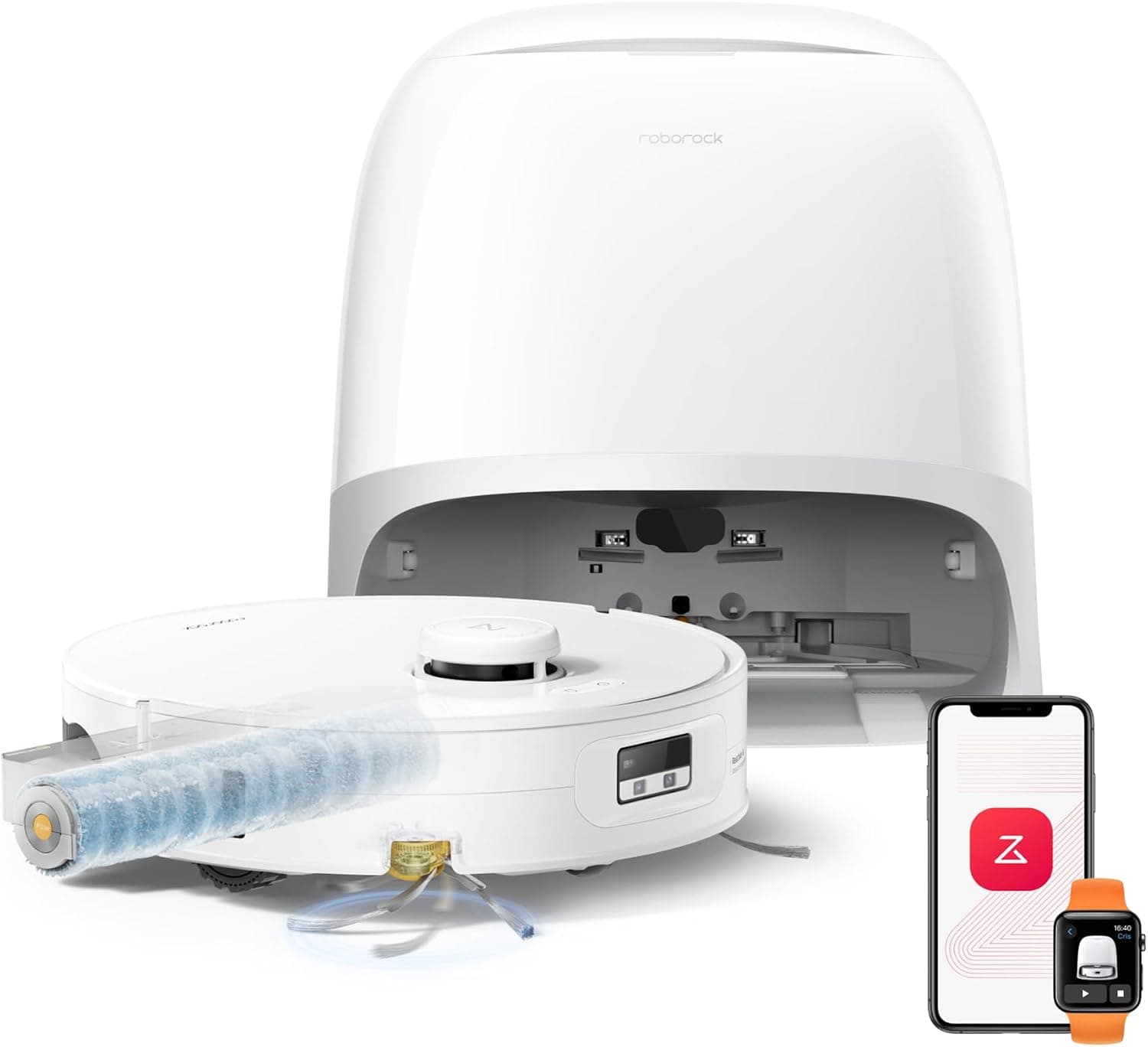
What Our Research Found
Flagship robot vacuums stopped competing on cleaning years ago. They compete on how long you can ignore them. The Qrevo Curv 2 Flow's pitch is exactly that: it vacuums, mops, empties itself, washes and dries its own mop pads, and asks for attention on a scale of weeks. At $999.99, the question isn't whether it's good. It's who it's for.
The dock is the product. Self-emptying dust collection plus automatic mop-pad washing and drying is what separates set-and-forget flagships from robots that quietly become chores themselves.
Roborock rates the Curv 2 Flow at 20,000Pa suction, and that spec is worth decoding. Rated pascals are measured at the fan under ideal conditions, so the figure signals headroom for carpet and pet-hair pickup rather than acting as a linear cleaning multiplier. The more meaningful engineering happens around the edges. The mopping system lifts or manages pads on carpet, mapping supports room-by-room schedules and no-go zones, and the dock's wash-and-dry cycle prevents the sour-mop problem that plagues cheaper mop hybrids. Real-time cleaning feedback in the app shows coverage as it happens.
Bottom line
In a larger mixed-floor home with pets, it credibly replaces daily sweeping and regular mopping, with human involvement reduced to emptying the dock bag and refilling water every few weeks. The costs are the four-figure price, a physically large dock that needs floor space and an outlet, and consumables like bags, pads, and filters that continue for the life of the machine.
Households that ran the numbers on their own cleaning hours tend to keep flagships happily. If your space is small or your budget is tight, mid-range robots deliver most of the floor-cleaning outcome without the automation ceremony, and that's the fair alternative to weigh.
How we assessed it
We assessed the Curv 2 Flow on the factors that separate flagship robots from the rest: dock automation completeness (empty, wash, dry), mopping behavior on mixed floors, mapping and app maturity, and what suction ratings really mean. Pascal figures are measured at the fan under ideal conditions, and they compare more reliably within a single brand's lineup than across competing marketing claims. The credible takeaway from a 20,000Pa-class rating is carpet and pet-hair headroom.
The Good & The Bad
thumb_up What We Loved
- check
Genuinely hands-off for weeks
Self-emptying plus mop washing and drying removes the daily and weekly touchpoints that make cheaper robots feel like pets that need feeding.
- check
True dual-function cleaning
Vacuum and mop run in coordinated passes with carpet-aware mop handling, so mixed-floor homes get both jobs from one machine.
- check
High suction headroom for pets and carpet
The flagship-class rated suction shows up as consistent pickup of embedded hair and debris where budget robots visibly struggle.
- check
Mature app control
Room schedules, no-go zones, per-room modes, and live coverage feedback. The software maturity matches the hardware tier.
thumb_down Honest Drawbacks
- close
Four-figure entry price
At $999.99 it has to replace real human cleaning time to justify itself. Small-space owners rarely get enough hours back to make that trade work.
- close
The dock is furniture
Self-cleaning docks are tall, deep, and outlet-hungry. Apartment layouts need to plan a spot for it rather than tuck it away behind a door.
- close
Consumables continue forever
Dust bags, mop pads, filters, and brushes are recurring line items. The machine converts your labor into a small ongoing subscription.
- close
Robot limits still apply
Stairs, cable clutter, deep-pile rugs, and dark thresholds remain robot kryptonite. A flagship reduces the rescue missions without abolishing them.
- close
Setup rewards patience
The first map is rarely the one you keep. Getting rooms, no-go zones, and per-room mopping rules right takes a few sessions in the app before the schedule truly runs itself.
Technical Breakdown
Rated suction
20,000Pa (manufacturer)
Dock automation
Self-empty + mop wash & dry
Mapping
Room-level control, no-go zones
Consumables
Bags, pads, filters, ongoing
Price
$999.99 at review time
How It Works
First-run setup takes under an hour. After that the routine is app schedules and occasional dock service.
Site the dock properly
The dock needs clear floor space, wall clearance, and an outlet. It's furniture-sized, and the robot has to approach it straight, so cramped corners cause docking failures.
Let it map, then edit
The first exploratory run builds the floor map. Then set room names, no-go zones around pet bowls and cable nests, and mopping rules per room in the app.
Schedule and forget
Daily or alternate-day runs by room and mode. The robot returns on its own to empty its bin, wash and dry the mop pads, and recharge.
Service the dock on cycles
Your recurring jobs shrink to three: replace the dust bag when full, refill and empty the dock water tanks, and swap pads and filters on their wear schedule.
How It Compares
| Feature | Qrevo Curv 2 Flow | Mid-range robot vacuum |
|---|---|---|
| Dock | Self-empty + mop wash & dry | cancelSelf-empty at best, no mop care |
| Mopping | Managed pads, carpet-aware | cancelBasic drag-pad or none |
| Human maintenance | Weeks-long cadence | Weekly bin/pad attention |
| Price | ~$1,000 | A fraction of flagship cost |
| Best for | Large, busy, mixed-floor homes | Small spaces, first robots |
Frequently Asked Questions
Is the Roborock Qrevo Curv 2 Flow worth $1,000 for a large home?
In a large, mixed-floor, pet-heavy house, yes, because a weeks-long hands-off cadence genuinely replaces cleaning hours you'd otherwise spend. In a one-bedroom apartment the payoff shrinks fast. Mid-range robots handle a small space nearly as well, and $999.99 buys a lot of other cleaning.
What does 20,000Pa suction actually mean on a robot vacuum?
20,000Pa is the manufacturer's rating, measured at the fan under ideal conditions. It signals carpet and pet-hair headroom rather than a number you'll feel linearly on your floors. What flagship-class suction really means in practice: embedded debris and ground-in hair come up consistently where budget robots leave streaks behind.
Does the Qrevo dock really wash and dry the mop pads?
Yes. The dock empties the dust bin, washes the mop pads, and dries them between runs, which heads off the sour-smelling pad problem that cheaper mop hybrids develop within weeks. Your remaining jobs shrink to bag changes and water-tank refills.
How much maintenance does the Qrevo Curv 2 Flow still need?
Plan on a weeks-long cycle rather than a weekly one: replace the dock's dust bag, refill and empty the water tanks, and swap pads, filters, and brushes on their wear schedule. Occasional rescues from a phone cable or a rug fringe stay part of robot ownership no matter what you spend.
Qrevo Curv 2 Flow vs a mid-range robot for everyday cleaning?
On bare floors the cleaning gap is modest. What the flagship actually buys is automation depth: mop washing and drying, smarter carpet handling, and much longer intervals between the moments it wants your attention. Pay for it if hands-off time is the point. Skip it if clean floors alone are.
Is the Qrevo Curv 2 Flow good for pet hair and shedding dogs?
Pet households are its most satisfied group by a wide margin. High suction headroom paired with daily scheduled runs stops hair from ever accumulating, and the self-emptying dock means nobody is prying a hair-packed bin open after every cycle.
library_booksReferences & Further Reading
Our reviews are informed by peer-reviewed research and authoritative health organizations. These sources provided context for this review:
Editorial note: Links to external sources are provided for informational purposes. ReviewHubNow is not affiliated with these organizations and does not receive compensation for linking to them.
The Qrevo Curv 2 Flow is what the robot-vacuum promise looks like once the automation is finished. Floors get handled, t...
Based on our research and analysis, Roborock Qrevo Curv 2 Flow Robot Vacuum and Mop scored 8/10. It is one of our top recommendations in its category.
View Price on Amazon Canadaarrow_forwardVerify official availabilityWhat Owners Report
Recurring themes we found across public owner reviews.
The dominant theme is disappearing labor. Owners describe floors staying guest-ready with the machine touched only when the dock asks for something.
Price sensitivity recurs, alongside surprise at the dock's physical size and the steady drumbeat of consumable purchases.
Pet households are the loudest advocates. Daily hair pickup without daily effort is the benefit they cite most.
Amazon Canada's standard 30-day return policy