Wireless CarPlay vs Wired: Is the Upgrade Actually Worth It?
Wireless CarPlay removes the cable and adds a connection delay and a battery drain. Here is how the trade-off breaks down by commute length and car.
ReviewHubNow Editorial Team
ReviewHubNow Editorial Team
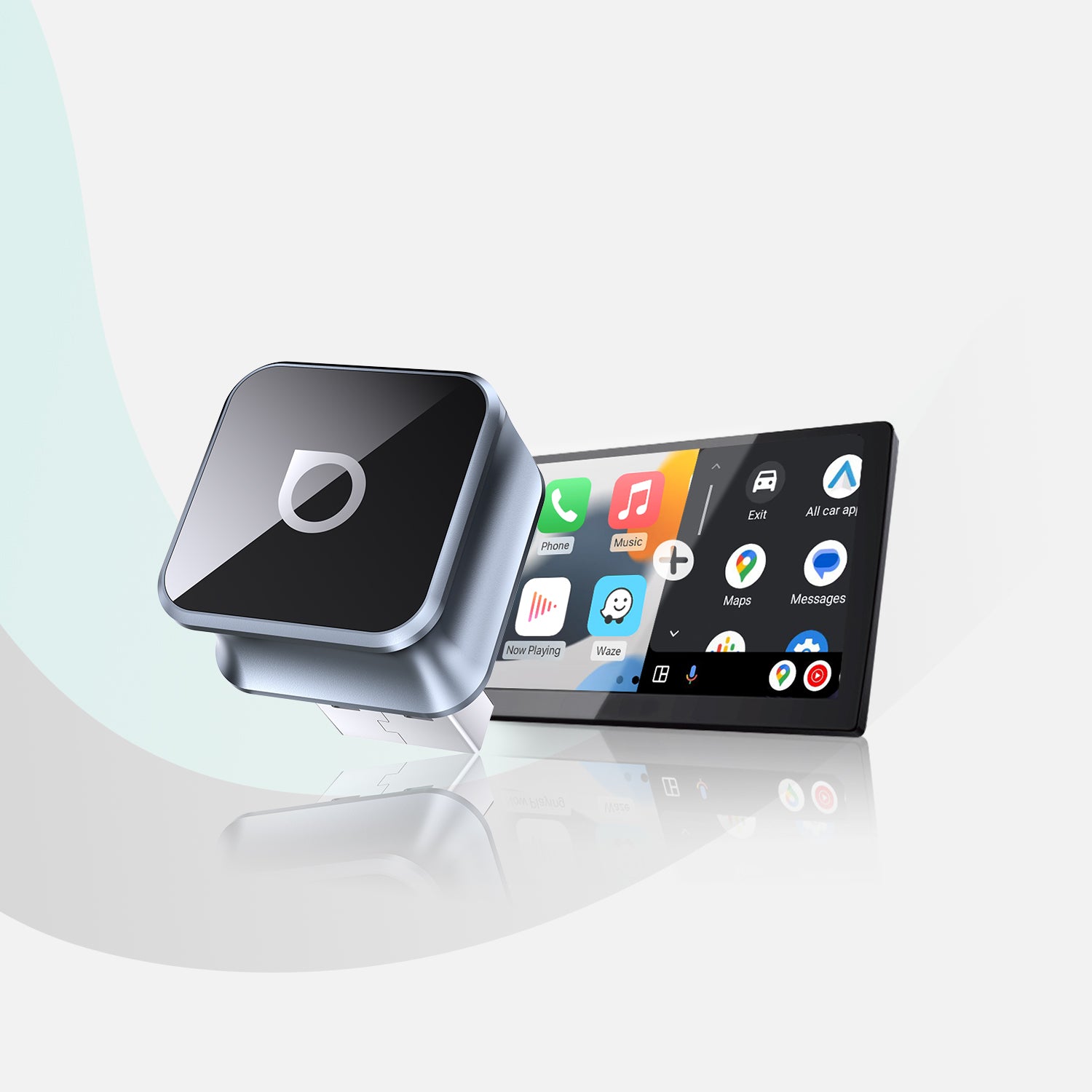
Most people arrive at this question the same way, somewhere around the point where a charging cable starts needing to be held at one exact angle to keep a connection. The obvious fix is to stop using a cable. The less obvious part is what you give up when you do.
Wireless CarPlay is not simply wired CarPlay without the wire. The two work differently underneath, and those differences show up as a slower start, a phone that discharges instead of charging, and a reliability profile that depends heavily on whether your car supports wireless natively or through an adapter.
How does wireless CarPlay connect, and why is it slower?
Wired CarPlay is a direct data connection, so the head unit sees the phone almost immediately after you plug in. Wireless works in two stages: Bluetooth handles the initial pairing and handshake, then hands the session over to a dedicated Wi-Fi link that carries the actual screen and audio data.
That handshake is why every wireless setup starts with a wait after you turn the car on. It is usually several seconds rather than instant, and it tends to be slower in the cold, when the phone is busy, or when it has just reconnected to another network. Descriptions of wireless CarPlay connecting instantly are describing the absence of manual effort rather than the absence of delay. The connection is automatic. The waiting is automatic too.
In practice this matters most for short hops. Pulling out of the driveway before the session establishes means navigation and audio arrive a block or two later, which is a minor irritation on a long drive and a recurring one on a five-minute errand.
Does wireless CarPlay drain your phone battery?
Yes, and this is the trade-off people underestimate. Wired CarPlay charges the phone while it runs, since the same cable carries power and data. Wireless removes the power half of that arrangement while adding load, because the phone is now running a sustained Wi-Fi link plus Bluetooth, GPS and a bright screen for navigation.
The result is a phone that discharges over a drive rather than topping up. On a short urban trip that is irrelevant. On a long highway run it means arriving with meaningfully less battery than you left with, and starting a drive already low is where people get caught out.
The standard fix is a wireless charging pad or MagSafe mount in the car, which restores charging without restoring the cable. It works well, and it is worth recognising it for what it is: an extra purchase solving a problem that wired CarPlay never had.
Is wireless CarPlay reliable, or does it drop out?
Native wireless implementations are generally dependable once connected, and dropouts tend to cluster around identifiable causes rather than appearing at random. Parkades and other structures with heavy radio interference are the usual culprit, along with phone software updates and occasional pairing confusion when a second familiar device is nearby.
Aftermarket adapters are a step down in consistency. That is not a criticism of any particular brand, it follows from what the hardware does. The adapter presents itself to the car as a wired CarPlay device, then re-broadcasts the session wirelessly to your phone, which adds a translation layer and a second wireless hop. More links in the chain means more places for the connection to falter, plus a device that runs warm on longer drives.
Once an adapter is connected the interface is identical, because CarPlay itself does not know the adapter is there. The difference lives in connection time and stability rather than in features.
What does wireless CarPlay actually improve?
Friction rather than function. Nothing on screen changes. What changes is that getting into the car stops involving a cable, and after a couple of weeks the reaching, plugging and untangling drops out of the routine entirely. It sounds trivial written down and does not feel trivial as a daily habit.
Two secondary benefits come up often and rarely get mentioned in marketing. Passengers stop unplugging your session to charge their own phones, which in a shared car is a real quality-of-life gain. And using the phone as a hotspot alongside CarPlay is simpler wirelessly, since certain wired configurations create conflicts between data sharing and the CarPlay session.
Should you buy a wireless CarPlay adapter?
Only if your car already has factory wired CarPlay, because the adapter converts an existing connection rather than adding the feature. A car without CarPlay at all needs a head unit replacement, which is a different project and a different budget.
Given that, an adapter is a reasonable purchase for anyone who wants the cable gone without replacing hardware, with realistic expectations: a slower start than native wireless, and a device that will occasionally need unplugging and reseating. Our compatibility guide covers which cars these work in, and the setup walkthrough for older vehicles covers the pairing steps that trip most people up.
So who should switch, and who should stay wired?
Wireless suits urban driving with frequent short trips, native support in the car, and a low tolerance for cable management. The connection delay fades into background noise, and a charging pad handles the battery question.
Wired remains the better choice for regular long-distance driving, for anyone who plugs in to charge anyway, and for anyone who values a connection that is up in two seconds every time. Adding an adapter to an older car and then driving an hour each way stacks the friction points faster than the convenience accumulates.
The realistic framing is a quality-of-life change rather than a transformation. It is most noticeable in reverse, on the day you borrow a car without it and find yourself hunting for a cable. Keeping one in the glovebox anyway costs nothing.
Editor's Pick
Affiliate link. We may earn a commission if you buy through it, at no extra cost to you.
More from Our Editors
Meta Quest 3S 512GB vs 256GB: How Much Storage Do You Actually Need?
By ReviewHubNow Editorial Team
Do You Need a Soundbar With a Built-In Subwoofer for a Small Room?
By ReviewHubNow Editorial Team
Ottocast Mini Cube 3.0 vs CarlinKit: Which Adapter Should You Buy?
By ReviewHubNow Editorial Team